Tips
Why Are Tree Roots Coming Up Through My Lawn?
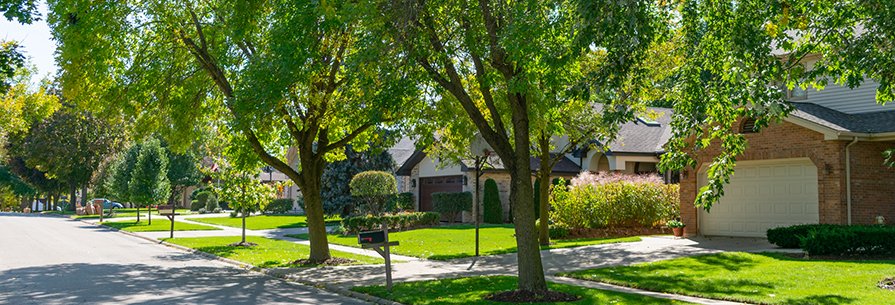
Surface roots are usually a soil problem, not a tree problem. The roots are not climbing. The ground around them is wearing away.
Why roots surface
Tree roots grow where there is oxygen and water, and in eastern Iowa that means shallow. Our clay-heavy soils drain slowly and pack tight, so most feeder roots sit in the top foot of ground instead of going deep.
Over the years, rain and mowing gradually carry soil off the high points. The roots are not rising so much as the ground is falling away from them. Add a couple of decades of foot traffic compacting the surface and they end up exposed.
The Iowa trees that do it worst
Silver maple is the champion by a wide margin, followed by Norway maple, cottonwood, willow, ash, and American elm. If you have a mature silver maple in a Cedar Rapids or Waterloo yard, you almost certainly have surface roots.
Oaks and honey locust tend to root deeper and cause fewer problems, though any tree will surface roots if the soil is compacted enough.
What surface roots actually cost you
Mower blades are the obvious one. Hitting a root at speed can bend a spindle or crack a deck, and it dulls blades in a single pass.
The trip hazard matters more if you have kids, older parents, or a walkway crossing the root zone. On commercial and municipal properties it becomes a liability question, not just an annoyance.
Roots under a sidewalk or driveway edge will lift and crack the slab as they thicken. That is the expensive version of this problem.
What can safely be removed
The working rule is that you can take roots outside a radius of roughly three times the trunk diameter without putting the tree at real risk, and you should not cut more than about a quarter of the surface roots in one season.
Cutting a major root close to the trunk is a different matter. That can destabilize the tree and open it to decay, and on a big mature tree it is genuinely dangerous. If a root is thick and near the base, leave it.
We handle raised root removal as part of a job. The honest answer on any given root depends on its size and distance from the trunk, and we will tell you which ones we would not touch.
The alternatives to cutting
Topdressing with a few inches of soil sounds appealing and usually backfires. Piling soil over roots suffocates them, and more than about two inches at a time can hurt the tree.
The better long-term answer is often to stop fighting it. Mulch the root zone out to the drip line and give up on growing grass there. It looks intentional, it ends the mower problem, and the tree is healthier for it.
If the tree is coming out anyway, grinding the stump and taking the raised roots in the same visit is far cheaper than booking two.
Common questions
Can you grind surface roots without removing the tree?
Yes, within limits. Roots well out from the trunk can be taken. Large roots near the base should be left alone because cutting them risks the tree.
Will cutting roots kill my tree?
It can if you take too much or cut too close. Staying outside roughly three trunk diameters and removing under a quarter in one season keeps the risk low.
Can I just cover the roots with soil?
Not more than an inch or two. Roots need oxygen, and burying them deeply is a common way to slowly kill a mature tree.
Do you do this for commercial properties?
Yes. Raised roots on walkways and parking islands are a regular commercial and municipal job for us across eastern Iowa.